Don't miss my next newsletter
Join 13,000+ reading first every week 👇 (completely free)
(having trouble signing up? Go here)
How to Go From Skinny Fat to Lean and Muscular
If you have a skinny fat physique, you've probably spent way too much time going back and forth on if you should bulk or cut and you're just confused with the entire process.
One of the first things I'd do if I was skinny fat is to clearly define what you're actually trying to achieve.
Most people say they want to build muscle, lose fat, and look more defined, but those goals are still pretty vague.
What does "more defined" actually mean?
Do you want to look athletic?
Do you want a Greek god physique?
Do you want to look like Brad Pitt in Fight Club or Brad Pitt in Troy?
Those are all lean physiques, but they require different amounts of muscle and slightly different approaches to get there.

Let's use a real example.
A guy inside my Average to Jacked program named Alejandro is 39 years old, 5'10", weighs 163 pounds, works an office job, and describes himself as skinny fat.
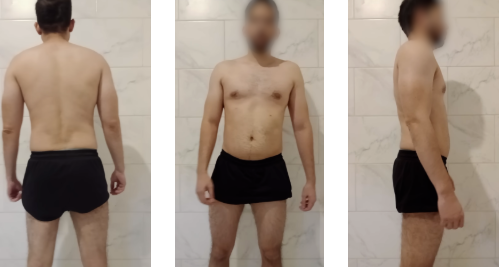
His goal is to lose fat, build muscle, and finally have an athletic-looking physique.
Instead of leaving it there though, I wanted to make that goal more concrete.
For someone his height, let's say the goal is to eventually be around 170 pounds while staying somewhere around 10-12% body fat. Now we actually have a concrete target we can build a plan around.
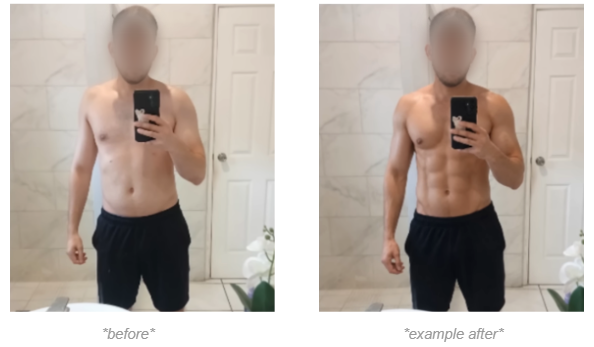
Once we have that goal, the next question becomes pretty simple.
What should he choose? Should he cut? or Should he bulk?
Looking at his physique, I wouldn't put him into an aggressive fat loss phase because he's simply not carrying enough total body weight for me to think losing another 15 or 20 pounds is going to create the physique he actually wants.
One thing I always say is that you'll never diet your way to being jacked.
So many people spend months cutting, finally get lean, and then realize they're just a smaller version of themselves.
The body fat is lower, but the muscle they were hoping to reveal simply isn't there.
That's why I would start someone like Alejandro with a body recomposition instead.
A recomposition simply means we're trying to build muscle while slowly losing fat. He's actually in a great position for this because although he's technically lifted weights before, he's never stayed consistent long enough to maximize his progress.
For someone in that position, you can often build a surprising amount of muscle while improving your level of leanness at the same time.
To keep it simple, I would have him eat around maintenance calories for the next several months while focusing on getting stronger.
A really easy starting point to calculate your maintenance calories is to take your current body weight in pounds and multiply it by 12-13.
Is that calorie target perfect? No.
No calculator is. But it's a simple place to start, and that's all we need.
Here's an example of a macro split using the above number of 13.
163 pounds (his current weight) x 13 = 2,120-calories.
Here is the macronutrient breakdown: (take note of the percentages)
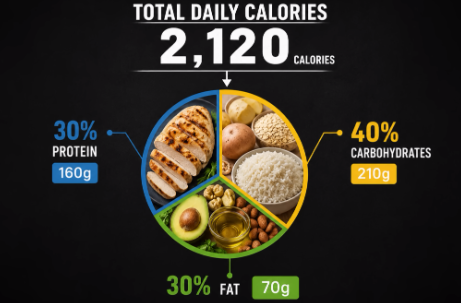
Once we've established that maintenance calorie target, the next step is figuring out how to actually eat those calories each day.
I'd simply take your calorie target and break it into reasonable protein, carbohydrate, and fat goals based off of the percentages above.
Every meal should include:
A quality protein source.
A carbohydrate source.
A healthy fat source.
Some fruit or vegetables whenever possible.
That's really it.
Using the example I laid out for you above, here’s what this philosophy currently looks like for me.
Most days, I eat three main meals.
Meal one is usually chicken sausage sautéed with sweet onion and bell peppers in avocado oil. For carbs, I’ll either add jasmine rice or make the smoothie I’ve been drinking for years with coconut milk, protein powder, Medjool dates, almond butter, raw honey, cacao nibs, frozen blueberries, and mango.
Meal two is usually eight ounces of grass-fed beef, jasmine rice cooked in beef bone broth, avocado, and a few pickles.
Meal three is normally another eight ounces of grass-fed beef or occasionally chicken thighs or wings. I’ll add vegetables like Brussels sprouts, asparagus, or green beans, and usually yellow potatoes or Japanese sweet potatoes for my carb source. About once a week, I’ll swap the beef for a ribeye.
Throughout the day, if I want something between meals, I’ll usually have fresh fruit like bananas, cherries, mango, or mandarins. Sometimes I’ll have a few dates with almond butter and honey, a glass of whole milk, or a protein shake if I need some extra protein.
That's pretty much how I eat year-round. If I'm trying to lose fat, maintain my weight, or build muscle, the foods don't really change. I just adjust the portion sizes to match the calorie target I'm trying to hit.
And if you're curious about the protein powder, or other supplements I personally use, the only supplement brand I currently recommend is Transparent Labs. You can go here https://athlete.transparentlabs.com/2xo and the discount code is A2J.
If you consistently hit your calories and protein while eating mostly whole foods, you're already doing what matters most.
From there, weigh yourself every morning under the same conditions and pay attention to your weekly average rather than your day-to-day fluctuations.
If your body weight is staying relatively stable while you're getting stronger in the gym, you're probably right where you need to be.
If you're losing weight too quickly and your energy starts falling off, eat a little more.
If you're steadily gaining body fat, pull calories back slightly.
The calorie number is just a starting point. Your body's actual response tells you whether adjustments need to be made.
Now that nutrition is taken care of, let's talk about the training.
This is where I think people overcomplicate fitness more than anywhere else.
I'm not thinking about whether every muscle has to be trained twice a week, whether one exercise is 3% better than another, or whether we've found the perfect amount of weekly volume.
The way I look at it is much simpler than that.
Has every major muscle group been trained with exercises that make sense?
Are those hard sets being pushed close to failure?
Are you recovering outside of the gym?
And are you coming back over the following weeks stronger than you were before?
If the answer is yes, you're probably doing just fine.
That's why my baseline recommendation has stayed the same for years.
Lift three days per week, train the major movement patterns, work hard, recover well, and spend your energy progressing instead of constantly redesigning your program.
Fitness becomes a whole lot easier once you stop trying to optimize every little variable and instead focus on becoming stronger over the next six months, the next year, and eventually the next several years.
Now let's put everything together.
For the first three to six months, I'd keep calories around maintenance while focusing almost entirely on getting stronger. I'd want every workout logged so we can see weights and reps gradually increasing over time. I'd stay active outside the gym with simple walks or another active activity that doesn't interfere with recovery, and during that entire period I'd expect strength to steadily improve while body weight stays relatively stable.
If that happens, there's a good chance your waist starts getting smaller while your shoulders, chest, back, and arms become more developed. That's exactly what we're looking for. You've started replacing body fat with muscle, even if the number on the scale hasn't changed very much.
If you've become noticeably leaner and built a solid foundation of muscle, continuing to recomp usually becomes less effective. At that point, building additional muscle generally requires giving your body a little more energy. That's when I would move into a controlled lean bulk by increasing calories by roughly 200 to 300 per day while continuing to follow the exact same basic training principles.
Notice what didn't change.
We didn't switch to a completely different workout program or suddenly start chasing every fitness hack on social media.
We simply kept getting stronger while slowly giving the body the resources it needed to continue building muscle.
Eventually you'll probably gain a little more body fat than you'd like. When that happens, run a short, controlled fat loss phase until you're back where you're comfortable, then go right back to building again.
That's really the long-term process.
Build muscle.
Run a short cut when needed.
Go back to building.
Repeat.
If I were giving Alejandro one recommendation, it would simply be this: stay with the recomposition for the next several months, keep training three days per week, focus on getting stronger, eat around maintenance with plenty of protein, stay active outside the gym, and don't overthink it.
If he follows that plan consistently for the next year, I have no doubt his physique will look completely different.
And if your physique looks similar to Alejandro's, there's a good chance the same approach will work for you too.
Another A2J member, Peter is a great example.
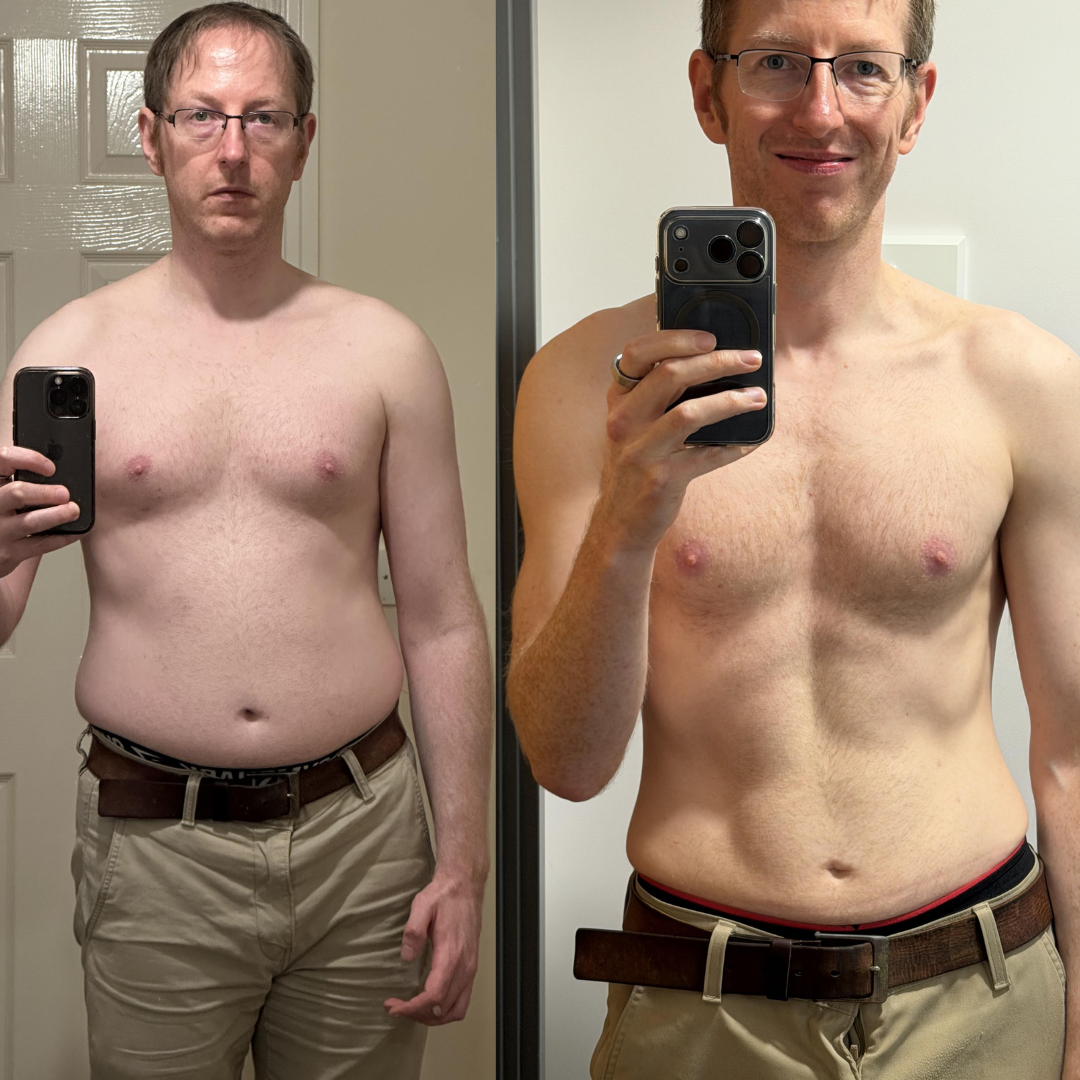
He started my Average to Jacked to program never having stepped foot in a gym, but he followed the program exactly as laid out, and is much closer to the physique he's always wanted.
That's exactly what I help guys do every single day.
If you're overwhelmed with fitness and just want someone to tell you exactly what to do, that's why I created Average to Jacked.
Whether you're a complete beginner or you've been lifting for years, whether you're training in a commercial gym or at home with limited equipment, the program gives you a simple, step-by-step plan that's designed to take the guesswork out of getting in shape.
I also personally help every member inside of the private community and my promise is to do this as long as it's realistic for me to do so, I'll continue answering questions, giving feedback, and helping members make adjustments along the way.
If you'd like my help, you can learn more about Average to Jacked here. Average To Jacked Workout Program
Eric
P.S. I've also just released a book Average To Jacked it's currently a #1 Best Seller on Amazon.
If you’re not ready for the full program and just want to learn my simple approach to building muscle without living in the gym, the book is a great place to start.
Grab your copy here https://a.co/d/0bLgtSGz (available in digital, paperback, and hardcover)